The shower is where a bathroom feels most dangerous — and where one good bar changes everything.
Shower Grab Bars: Choose the Right Bar Before the Next Slippery Morning
You step in wet, you reach for balance, and for a second there is nothing solid to hold. For an older parent, for someone recovering from surgery, for anyone whose knees or balance are not what they were, that second is the whole problem. Shower grab bars are not decoration. They are the thing your hand finds before a slip becomes a fall.
This guide helps you choose bathroom grab bars for a shower the right way: the right length, the right grip, the right material, and the right way to fix them to the wall. No jargon, no sales pitch — just the questions to ask before you buy.
This is a buying guide, not a shop. There are no prices and no checkout on this site. When you know what you need, the product pages and trade quotation are on our supply site.
See Shower Grab Bars on Our Supply Site How to Choose

If you are buying for a project, a care facility or resale, go straight to the supply site for specifications and a written quotation. If you are buying for your own home, use this guide to choose, then ask a qualified installer or distributor to supply and fit the bar.
How to Choose Shower Grab Bars
Start with where the hand goes, not with the catalogue
Think about the movement, not just the wall. Where does the person step in? Where do they stand under the water? Where do they sit, if there is a shower seat? Where do they turn to step out? A bar that looks right on a product photo but sits where no hand naturally reaches is not helping anyone.
A practical way to check: stand in the shower (dry, shoes on) and mime the whole routine — in, stand, wash, turn, out. Mark where your hand wants support at each step. That is where bars belong. One well-placed bar beats two badly placed ones.
Length: measure the wall, then choose
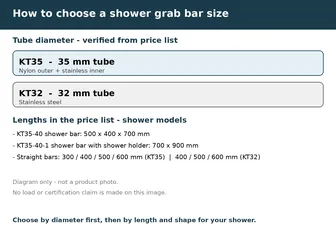
Common U.S. shower grab bar lengths are 12″, 18″, 24″ and 36″. Our supply range lists metric models — for example, straight bars in 300 / 400 / 500 / 600 mm — so measure in the unit your installer works in and convert before you order. A longer bar gives more hand positions along the wall, which helps when balance is uncertain. A shorter bar fits a tight corner or a narrow shower stall. Do not choose by catalogue photo alone: measure the clear wall space, allow room for the fixings at each end, and check that the bar will not block a shower door, a seat or a control.
Length and position for a specific shower type (for example, a transfer shower versus a roll-in shower) vary — see the ADA Basics section below, and confirm the final layout with your installer or designer.
Diameter and grip: what a wet hand can actually hold
Grab bars for shower use are usually round, and the ADA guidance discussed below refers to a diameter range of 1¼″ to 2″. In our supply range, that means two real choices: a 35 mm (1.38″) nylon bar and a 32 mm (1.26″) stainless bar. Both sit inside that general range. That is dimensional information only — it is not a claim that a specific model is ADA-certified.
Grip matters more than it looks. A wet hand on smooth metal slips. A nylon outer layer feels warmer and easier to grip with wet or soapy hands. Polished stainless feels slimmer and looks at home in a modern bathroom. If the person using the bar has weak grip, arthritis or numb hands, choose the grip first and the look second — and let them hold a sample or a similar bar before you commit, if you can.
Material: what survives a wet bathroom
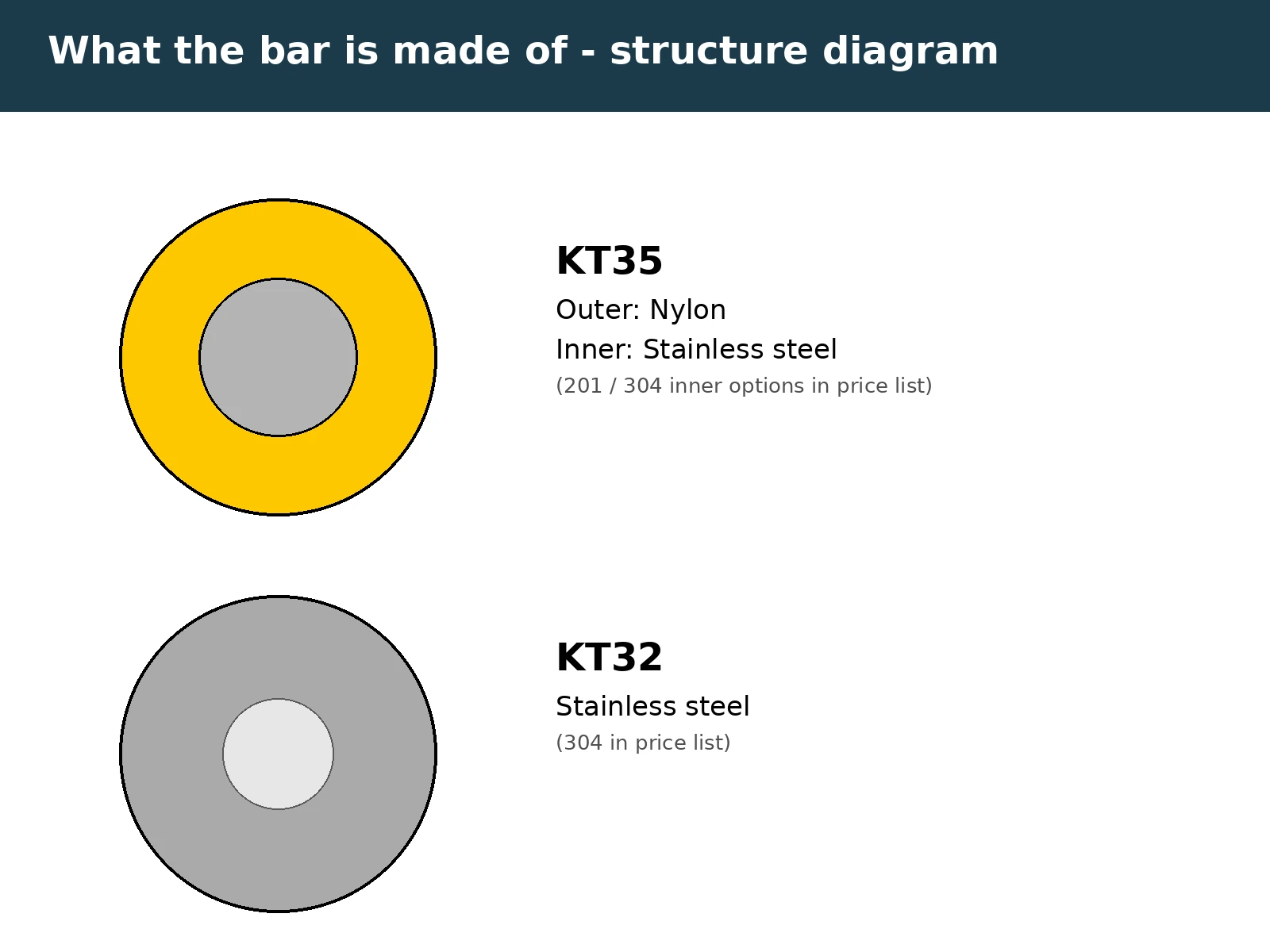
Two materials cover almost every shower grab bar worth fitting:
- Nylon over a stainless-steel core (KT35, 35 mm). The nylon surface is warm to the touch and easy to grip; the steel core carries the structure. Core options in our supply range are 201 or 304 stainless steel, by model.
- All stainless steel (KT32, 32 mm, 304 stainless steel). Slimmer, harder-wearing, and suited to a clean stainless look. In a constantly wet shower, stainless grade and finish matter for corrosion over time.
Do not judge a bar by weight alone or by a shiny photo. Ask for the specification sheet on the supply site, and check diameter, material and length against the wall you actually have.
Mounting type: fixed bars and suction bars are not the same thing
This distinction matters, and it is where most buying mistakes happen:
- Fixed, wall-mounted grab bars — screwed and anchored into the wall structure — are the bars this guide is about. They are the ones meant to take body weight when someone slips or stands up.
- Suction grab bars and no-drill bars are a different category: temporary aids that grip by suction or adhesive. They can help with light steadying, but they are not a substitute for a properly anchored bar, and they must be checked before every use. We do not present suction bars as equivalent to fixed bars, and we do not sell them as a structural solution on this site.
If your wall is tile over plasterboard with no stud behind it, that does not mean “any bar will do.” It means the fixing method matters even more — see Installation Guide below, and get a professional opinion before you drill.
Five questions before you choose — checklist
- Who uses this shower, and what movement do they find hardest?
- Where exactly does the hand need support — in, standing, sitting, out?
- How much clear wall is there, and what length fits it?
- Which grip can a wet hand hold — nylon or stainless?
- Who will install it, and what is behind the wall?
Answer those five, and the right shower grab bars almost choose themselves. If you cannot answer question 5, do not order yet — find the installer first.
Further reading: Are Suction Cup Grab Bars Safe? Understanding the Risks and Safer Alternatives
Further reading: Screw-Fixed vs. Suction Cup Grab Bars: Safety, Installation, and Long-Term Reliability Comparison
Further reading: How to Choose the Right Grab Bar Size, Diameter, and Grip for Bathroom Safety
Shower Grab Bars Range
The bars below are shown here only as a guide. Full specifications, and trade quotations, are on the supply site. No prices and no checkout on this page.
KT35 Shower Grab Bars — Nylon, 35 mm
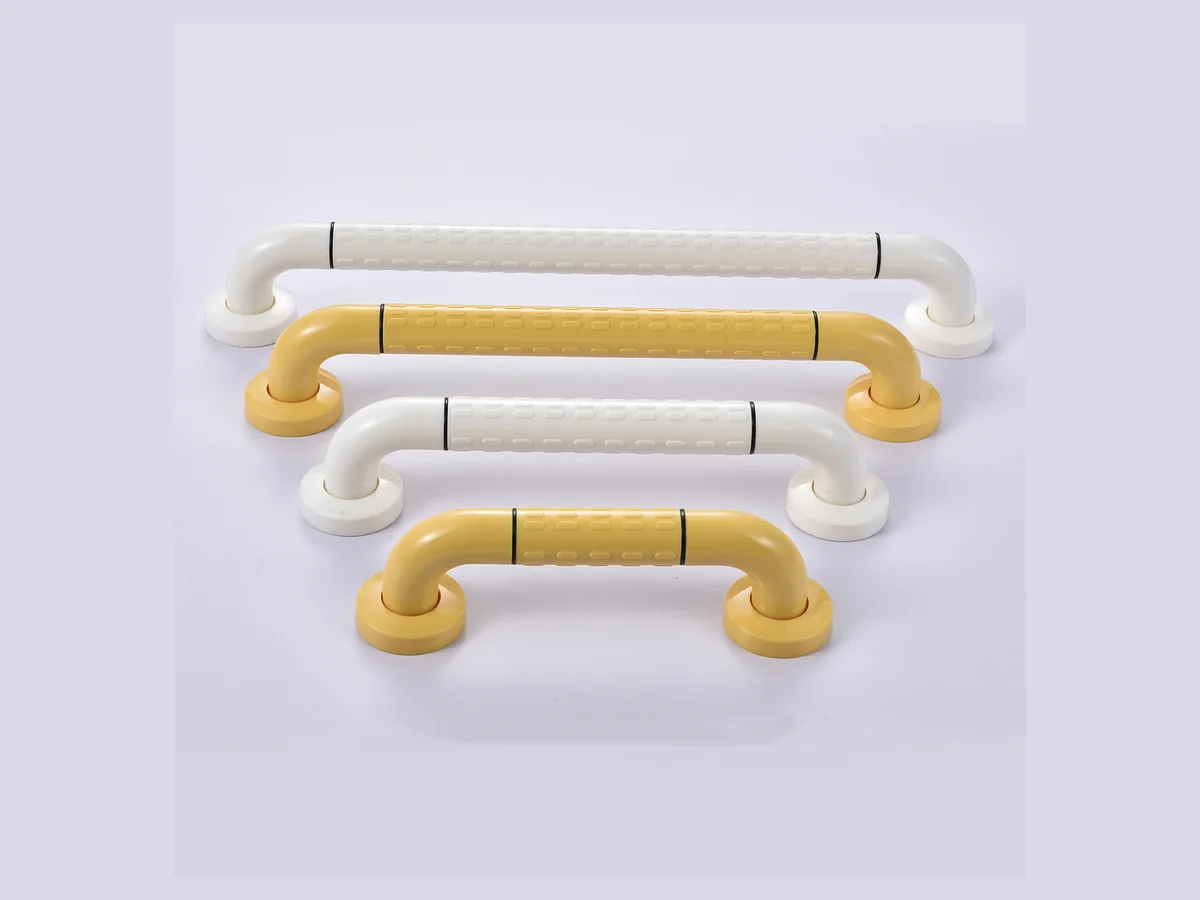
The nylon shower range: a warm, easy-grip surface over a stainless-steel core, in 201 or 304 stainless options by model.
- KT35-40 — Shower grab bar, 500 × 400 × 700 mm. A shaped shower bar for the wall beside the showering position.
- KT35-40-1 — Shower grab bar with shower-holder, 700 × 900 mm. The same shower-bar idea with a holder for the hand shower.
- KT35-23 — Straight bathroom grab bar, 300 / 400 / 500 / 600 mm. A straight bar for a shower wall, an entrance wall or beside a shower seat — choose the length that fits your measured wall.
See KT35 specifications and request a trade quotation →
KT32 Shower Grab Bars — Stainless Steel, 32 mm, 304
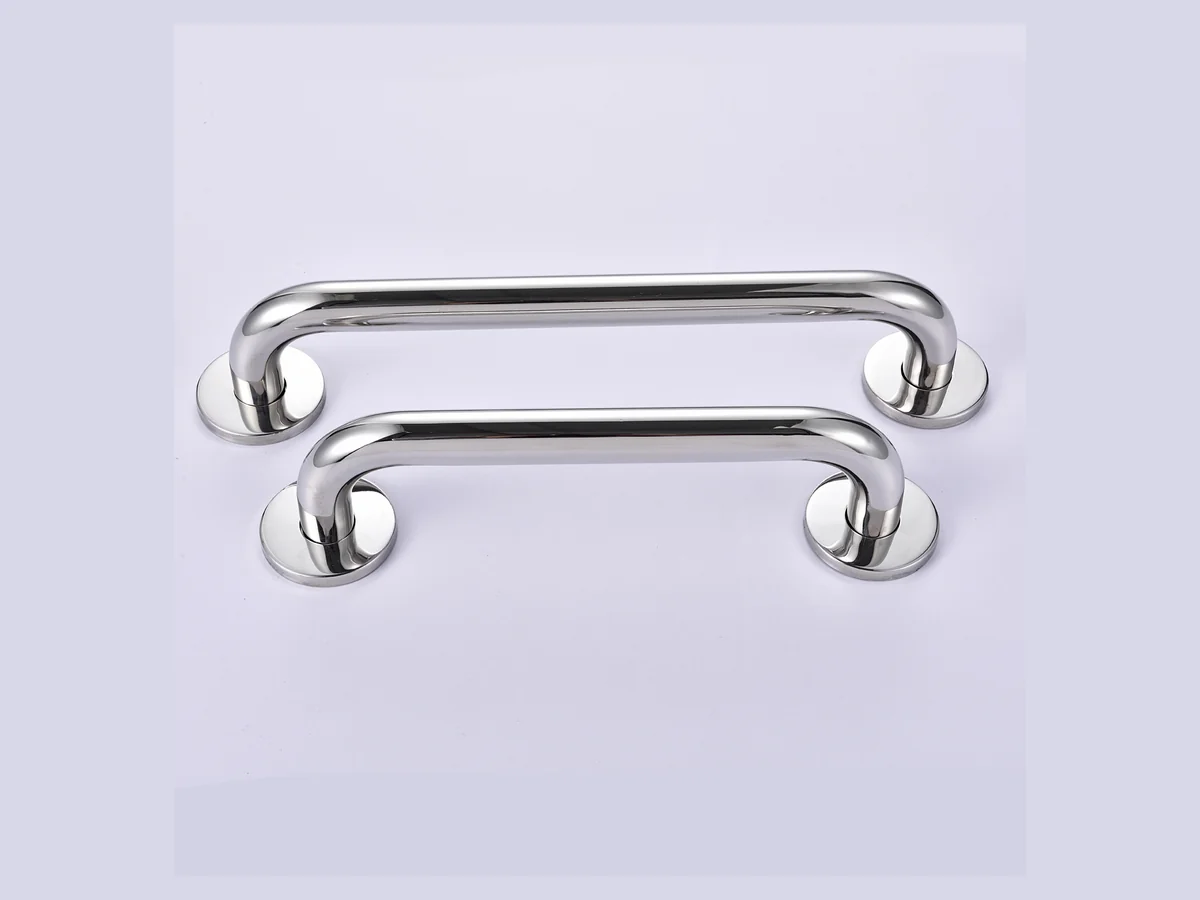
The stainless alternative in a slimmer profile: 304 stainless steel, 32 mm (1.26″) diameter. Straight models in 400 / 500 / 600 mm, plus shaped models for bathroom walls. Choose stainless when the look matters and the grip is still comfortable for the user — and check the grip with wet hands before you commit.
See KT32 specifications and request a trade quotation →
Pair it with a shower seat
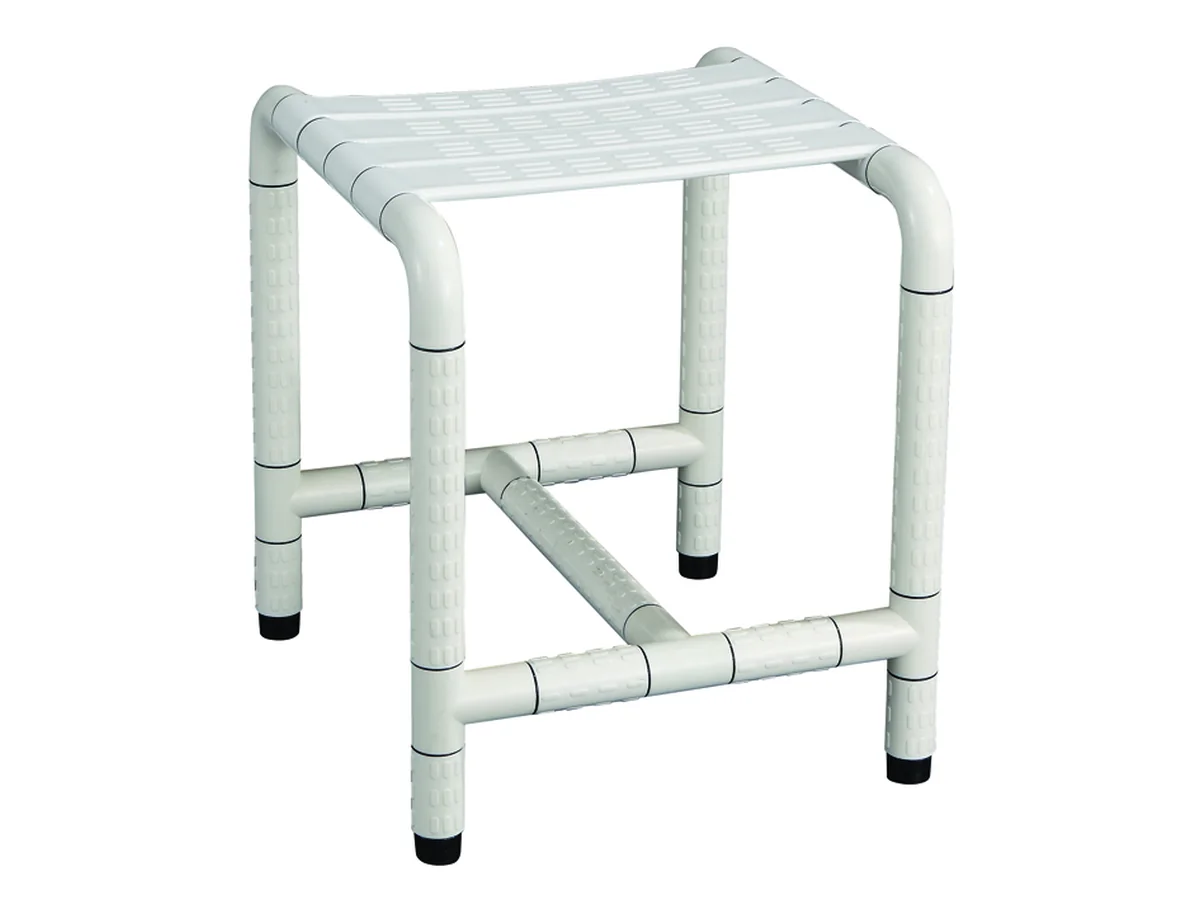
A shower seat and a shower grab bar work as a pair: the seat takes the weight of sitting, the bar takes the movement of standing up. Our supply range includes wall-mounted, flip-up, floor-standing and fixed shower seats. If the person cannot safely stand through a whole shower, plan the seat and the bar together, not as an afterthought.
See shower seats on the supply site →
What this page does not do
We do not compare prices here, and we do not take orders here. Price, minimum order, lead time, load capacity and certification for a specific model are not stated on this traffic site. Before test reports and certificates are received and verified, our sites publish no load-capacity or certification claims. For a specific order, please state in your inquiry on the supply site what documents you need, and what can be provided will be confirmed in the written quotation.
Installation Guide (Summary)
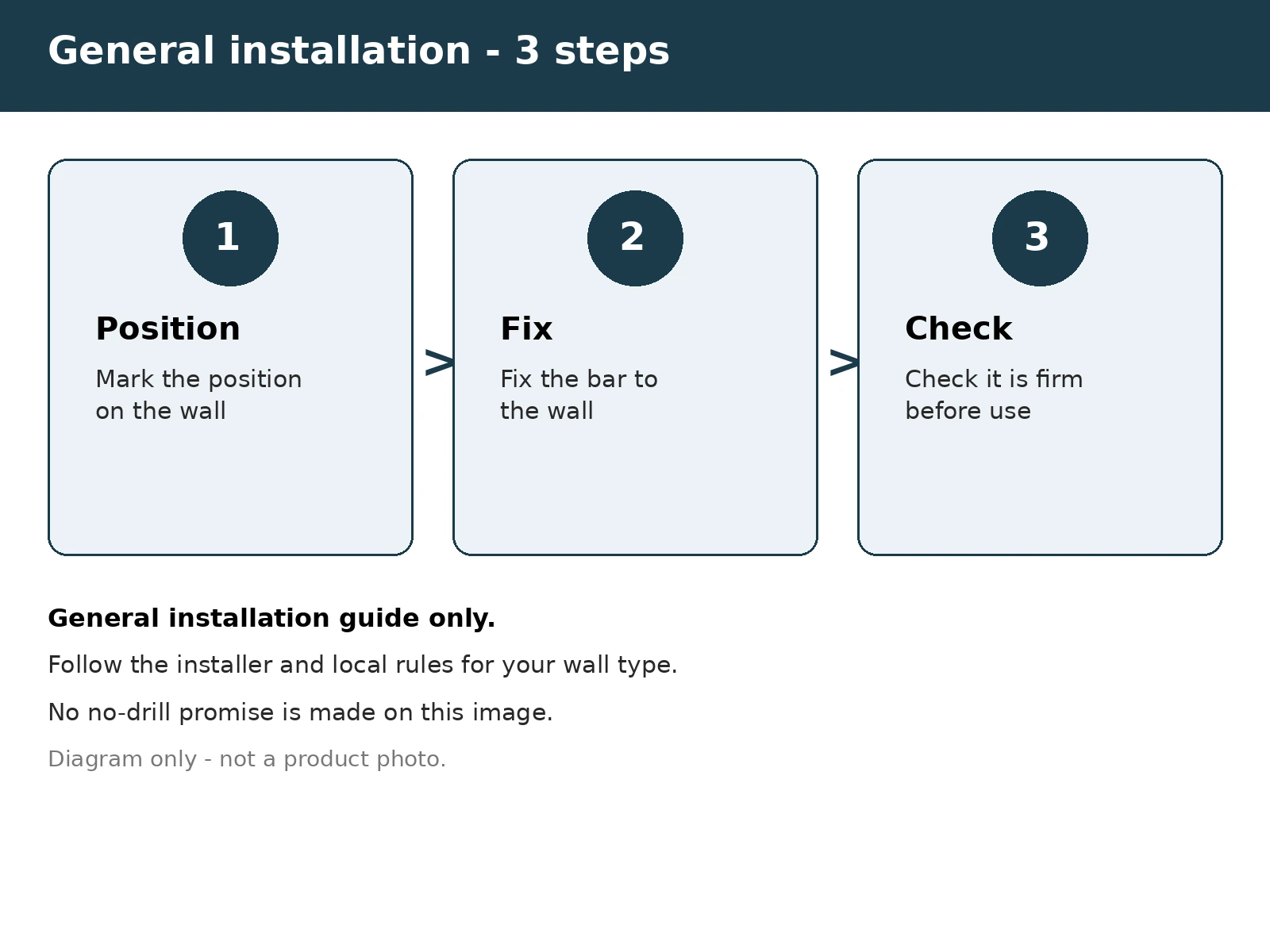
General guidance only. This is not the installation manual for a specific model. Always follow the instructions supplied with the bar you buy, and local building requirements.

- Measure and mark. Mark the bar position at the height and place where the hand naturally reaches (see ADA Basics for the general height range used in accessible bathrooms). Check door swing, seat position and shower controls before you drill.
- Find what is behind the wall. Fixed grab bars must be anchored into solid structure — wall studs, blocking or a suitable masonry fixing — not into tile or plasterboard alone. Use a stud finder, and if you are unsure what is behind the wall, stop and ask a professional.
- Drill, fix and seal. Drill to the fixing manufacturer's instructions, fit the bar level and firm, and seal around the fixings so water cannot get behind the tile. A bar that moves, even slightly, is not finished.
- Test before use. Pull and push the bar firmly in every direction before anyone relies on it in a wet shower. If it moves, do not use it — refit it.
- Check it again. Re-check fixings from time to time, especially in a wet shower. Loose fixings, cracked grout or water staining around a fixing are reasons to refit, not to ignore.
What not to do: do not fit a structural bar with suction alone; do not fit it where only tile and plasterboard will hold it; do not fit it at a height or angle that forces an awkward reach; and do not assume a bar fitted for one person suits everyone who uses that shower. When in doubt, hire a qualified installer — the cost of professional fitting is small next to the cost of a fall.
Further reading: Bathroom Grab Bar Placement Guide: Heights and Locations for Maximum Safety
Further reading: Standard Heights and Angles for Grab Bars in Walk-In Showers, Bathtubs, and Toilets
ADA Basics — What the Standard Generally Says
This section explains the general ADA Standards for grab bars. It is general information, not legal advice and not a claim about our products. Local building codes can differ, and a qualified designer or installer should confirm what applies to your project.
ADA grab bars — the kind people search for as “ada grab bars” — are defined in the ADA Standards (§609, Grab Bars) for accessible bathrooms. In general terms, the standard covers:
- Diameter: 1¼″ to 2″ (about 32–51 mm) for round bars. Our supply diameters — 35 mm (1.38″) and 32 mm (1.26″) — sit inside that general range. Again, that is dimensional information, not a certification claim for any specific model.
- Clearance: 1½″ (about 38 mm) between the bar and the wall, so a hand can grip fully around the bar.
- Height: horizontal bars are generally mounted 33″ to 36″ above the finished floor in accessible toilet and shower compartments.
- Strength (general standard, not a product claim): the ADA standard requires grab bars and their fixings to withstand a force of 250 lbf (pounds-force) applied in any direction. Whether a specific model meets that requirement depends on its test report and its fixing — which is why we do not publish a load claim for a specific model until its test report is received and verified.
- Length and position: required lengths and layouts vary by compartment type — for example, transfer showers and roll-in showers have different bar layouts — so there is no single “ADA length” for every shower. Measure the compartment you have, and confirm the layout against the current standard and local code.
The honest version: “ADA” describes a standard for accessible design. It is not a label a seller can print on a bar without the test evidence behind it. If ADA compliance matters to your project, ask for the test report and fixing specification in your supply-site inquiry, and have your installer confirm the layout on site.
FAQ (Summary)
- What length of shower grab bar should I choose?
- Measure the wall and the movement first (see How to Choose). Common U.S. lengths are 12″, 18″, 24″ and 36″; our supply models are listed in millimetres (for example, straight bars in 300–600 mm). A longer bar gives more hand positions; a shorter bar fits a tight stall. Do not guess — measure.
- Nylon or stainless steel — which is better for a shower?
- Nylon (KT35) is warmer and easier to grip with wet hands. Stainless (KT32, 304) is slimmer and harder-wearing. For weak grip or arthritis, choose grip first. For a modern look and easy cleaning, stainless is often preferred. Both need proper fixing — material alone does not make a bar safe.
- Can I install a shower grab bar myself?
- If you can reliably find studs or solid structure, drill tile without cracking it, and seal the fixings, a competent DIYer can do it. If any of that is uncertain, hire a qualified installer. A badly fitted bar is worse than no bar, because it gives false confidence.
- Are suction grab bars good enough?
- As a light steadying aid, sometimes. As a structural safety bar, no. Suction bars can lose grip without warning, especially on textured tile or with soap residue. For anyone who might actually fall and grab the bar with full body weight, use a fixed, anchored bar.
- Are your shower grab bars ADA-certified?
- We do not claim ADA certification for specific models on this site. The ADA Basics section above explains the general standard; diameter is the only product fact we state against it, and load and certification for a specific model are confirmed only in a written quotation on the supply site, once the relevant test report is available.
- Can I buy a single bar here?
- No. This site is a guide, not a shop. Homeowners should take this guide to a local installer or distributor. Trade buyers — distributors, installers and care facilities — can request a quotation on the supply site.
- How much do shower grab bars cost?
- We do not publish prices on this guide site. Trade prices, minimum order and lead time are confirmed in a written quotation on the supply site for the models and quantities you name.
Request a Quote
Ready to specify shower grab bars for a project?
If you are a distributor, installer or care-facility buyer, take the next step on the supply site — where specifications are listed and quotations are made in writing. If you are a homeowner, take this guide's checklist to your installer, and ask them to specify the length, grip and fixing your shower actually needs.
Wholesale and OEM inquiries are handled on our supply site. Click below to send your inquiry there — terms are confirmed in written quotation.